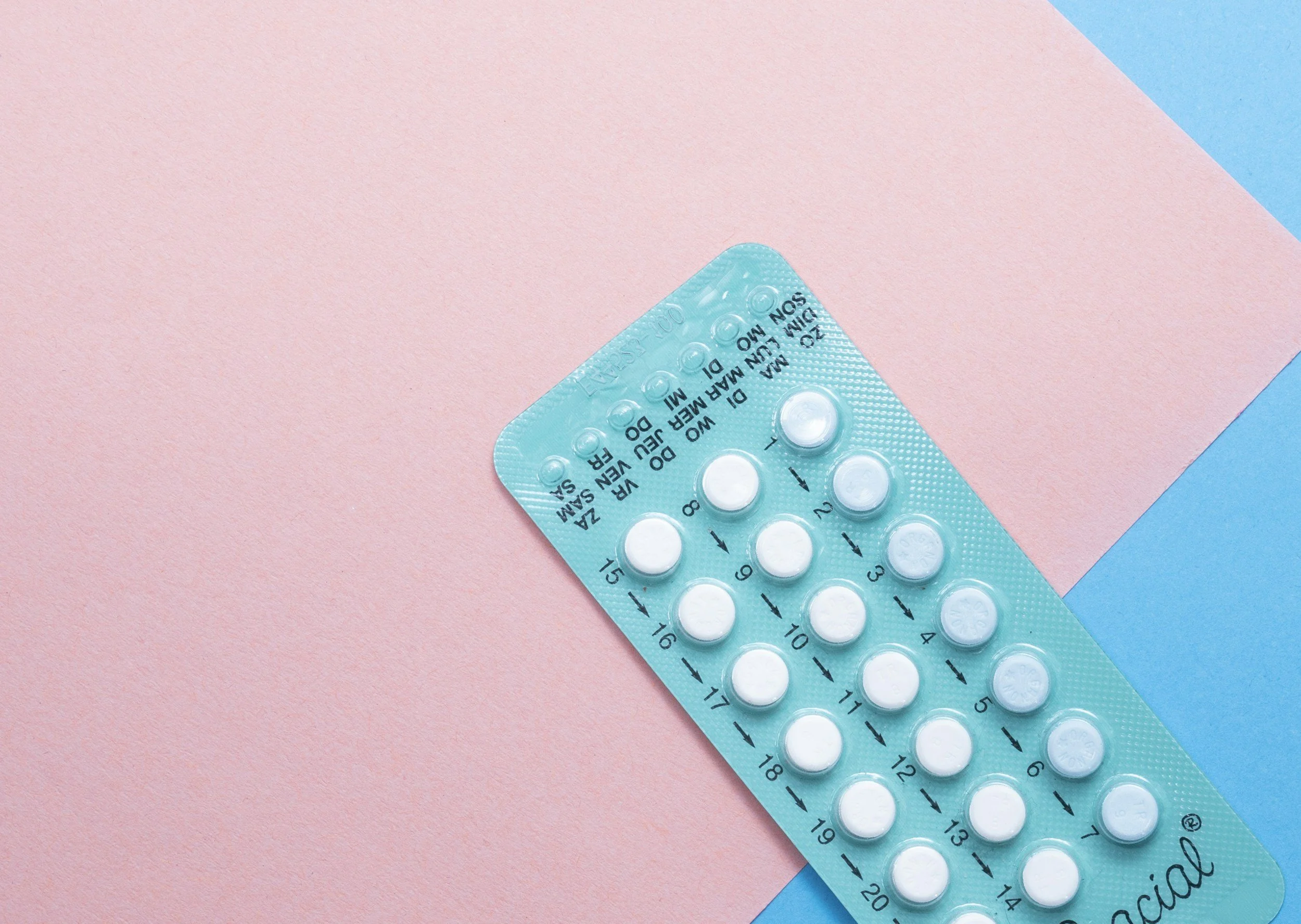
Everything you ever wanted to know about birth control
I was 17 when I was first prescribed the pill. The appointment lasted eight minutes. I was not told about SHBG. I was not told which synthetic progestin I was being given or what else it binds beyond the progesterone receptor. I was not told about the cortisol profile changes, the depression association documented in over a million women, or the preference reversal. The information existed. It was published. It was not passed on.

Hangry
You're mid-sentence, four hours since your last meal, and your brain just — stops. Not dramatically. You lose the thread. Then someone puts food in front of you and you're back, embarrassingly quickly. Here's what is actually happening in your prefrontal cortex. And here's the part that matters even more: the myth that the luteal phase makes you cognitively impaired is not supported by a 2025 meta-analysis of 102 studies and 3,943 women. The fog is real. The explanation isn't what you've been told.

Fear Memory & Consolidation
I have always had a lot of fears. And since a young age I have been adamant about overcoming them. Not tiptoeing around them. Collecting them. Every time I collect one — every time I do the thing and survive it — something happens that still astounds me. How easy the second time is. How there is almost literally no stopping me. I always thought this was a mindset. It is not a mindset. It is fear extinction — and the female brain is specifically, hormonally primed for it at particular points in the cycle. Here is the science behind the thing that has helped me most.

Know Your Thyroid
A butterfly-shaped gland the size of a walnut controls your metabolism, heart rate, body temperature, brain, mood, hair, and menstrual cycle. When it goes wrong — and in women it goes wrong 200 times more often than in men — it goes wrong slowly. Quietly. In ways that medicine has spent decades attributing to stress, anxiety, age, and not sleeping enough.

The Iron-y
The reference range your doctor uses to rule out iron deficiency was built from a population where iron deficiency had become so common it looked normal. A ferritin of 14 ng/mL comes back with no flag, no follow-up, and no conversation. The evidence says the threshold should be 50. Here is what the gap between those two numbers costs.

Cortisol; Friend or Foe?
Everyone is told to lower their cortisol. Nobody explains what cortisol actually does — or that in the female body, it follows a measurably different pattern across the menstrual cycle, interacts with estrogen through two opposing receptor pathways, and was excluded from stress research for decades because its variability was considered a confound. That variability is the biology.
Bio-electricity
Every heartbeat is a voltage wave. Every pain signal is physics — charged particles crossing a membrane, a signal travelling at the speed of a sprinter. Your body is not just biological. It is electrical. And the physics runs differently in you than the textbooks have ever accounted for.