

Estrobolome
For years I treated my bloating like a crime scene, and food was always the suspect. Gluten one month, dairy the next. What I kept missing was the timing — it wasn't my plate, it was the conversation between my gut bacteria and my estrogen.

Perimenopause III
There is a sentence women say quietly, usually near the end of an appointment, usually while reaching for a coat: I think there is something wrong with my brain. The measured answer is more reassuring and more precise than either the fear or the dismissal. Women in late perimenopause stopped improving on repeated cognitive testing while every other group carried on, and then the curve came back. But underneath that sits a second question, about ADHD in this window, where a systematic review went looking for studies and found none.

Perimenopause I
Four men were laughing about their "hormonal" wives when the only woman at their level crossed the room, dropped her jacket on the floor, and showed them the sleeves she'd cut out of her blouse. Perimenopause hormones do not fade on a gentle slope. FSH rises first, estradiol spikes higher than it did at twenty-five, and progesterone leaves years before anyone mentions menopause. What is actually happening, why a single blood test cannot see it, and what the evidence says helps.

ADHD & Neurodivergence in Women
There is a specific week of the month where everything becomes harder. Not harder the way Monday is harder than Friday. A different kind of harder — where tasks that were manageable seven days ago now require effort that feels unreasonable, where you lose your keys three times before 10am. If you have ADHD, that week is not a coincidence. It is your dopamine system responding to a hormonal signal nobody told you about.

Women’s Immune System
The female immune system is not weaker, more emotional, or more suggestible than the male. It is faster to activate, produces higher antibody titers, and clears infections more efficiently. The same biology that makes it stronger also makes it more likely to attack self. Here's the chromosome-level explanation nobody taught you.
Neuroplasticity
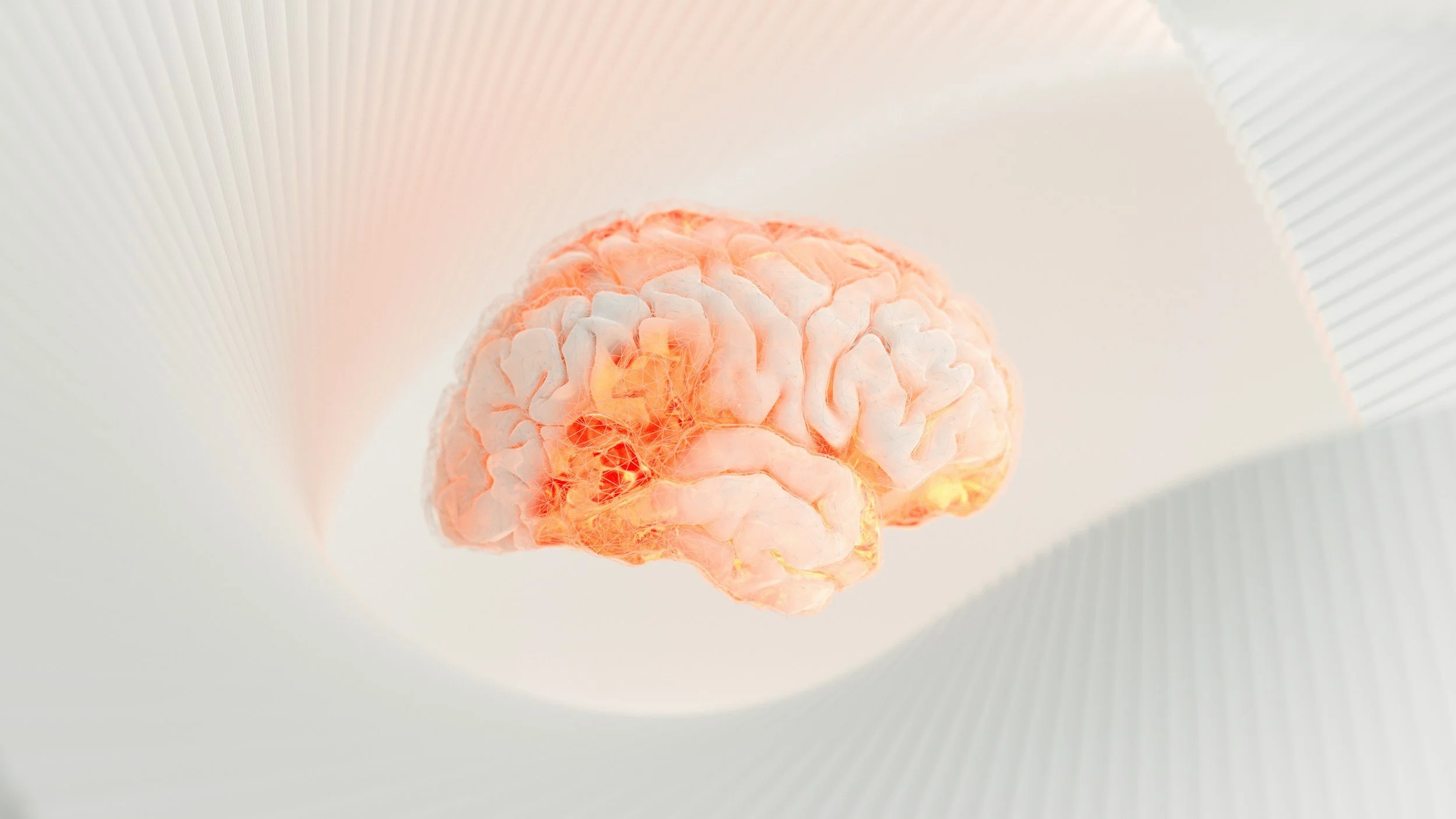
There is a belief I held for most of my twenties that I no longer hold: that my brain had a ceiling. That the capacity I had was the capacity I got. I know now that this is not how the brain works. Neuroplasticity does not pause for difficult years. And in the female brain, it runs on a hormonal architecture that science is only beginning to take seriously.

Hormonal Headaches
I remember the first time I understood that my migraines had a pattern. Four months of tracking in a notes app, and the dates kept clustering around the same point in the month. Always the days just before my period. Nobody had told me this was a thing — not a doctor, not a neurologist, not the pharmacists I had consulted about whether I was taking too much ibuprofen. I had spent years treating each migraine as an isolated event. A failure of hydration. A punishment for the glass of wine. I had a list of suspected causes as long as my arm, and not one of them said: your estrogen just dropped and your trigeminal nerve is reacting. This is that explanation.

Fat = Fat. Right?
For most of my life, fat was a number. A percentage. A thing to reduce, redistribute, be ashamed of in summer. I had no idea it was an organ — several organs, actually, each with its own cellular structure, its own hormonal language, its own metabolic personality. Brown fat burns. White fat stores. And beige fat, the one nobody mentions, can switch between both depending on the signals it receives. What nobody told me is that women have a thermogenic advantage built into their adipose biology. Until estrogen declines. Then everything changes at once.